Türkçe
The Role and Attitude of the "Şûrâ-yı Devlet" in Waqf Matters
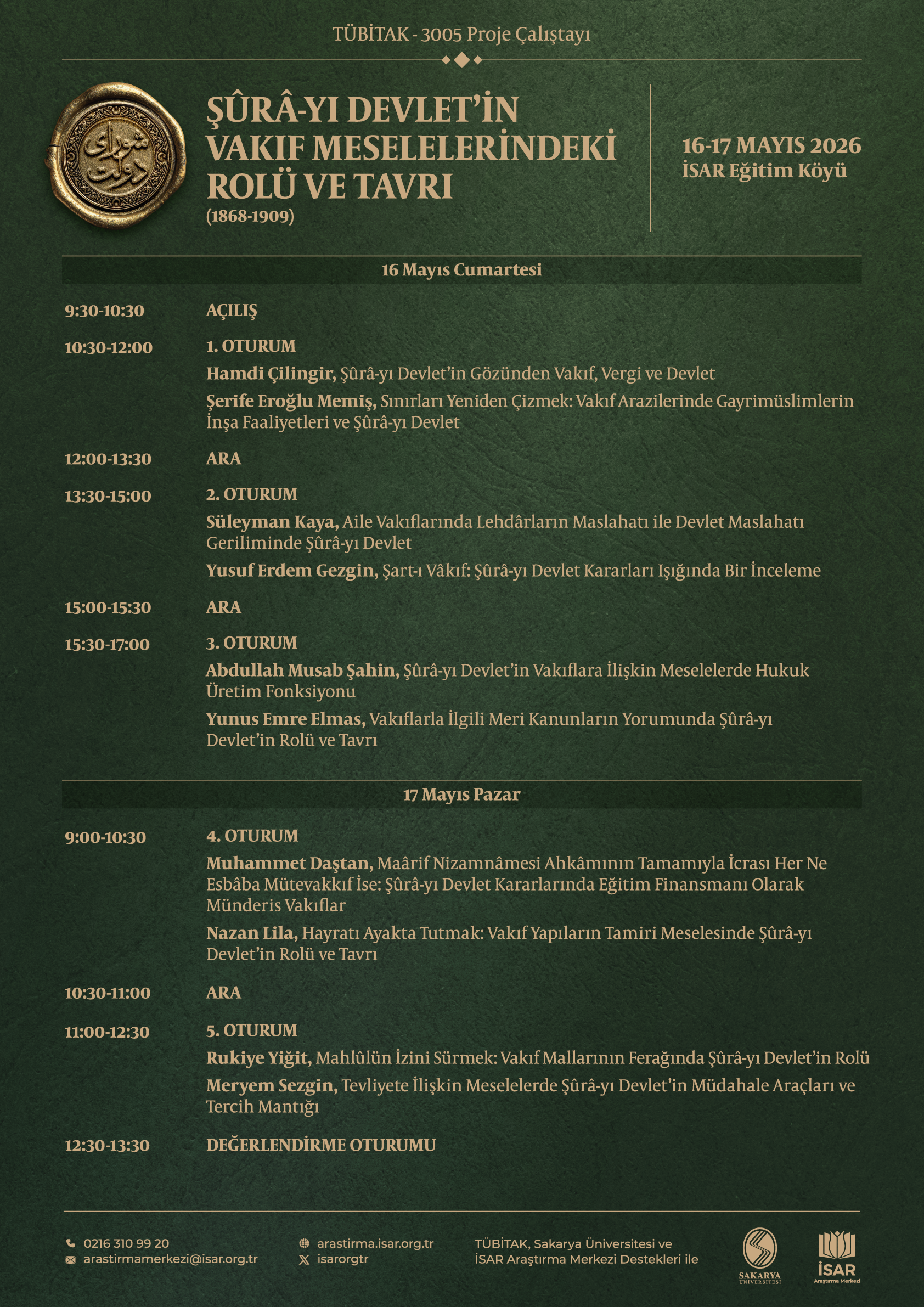
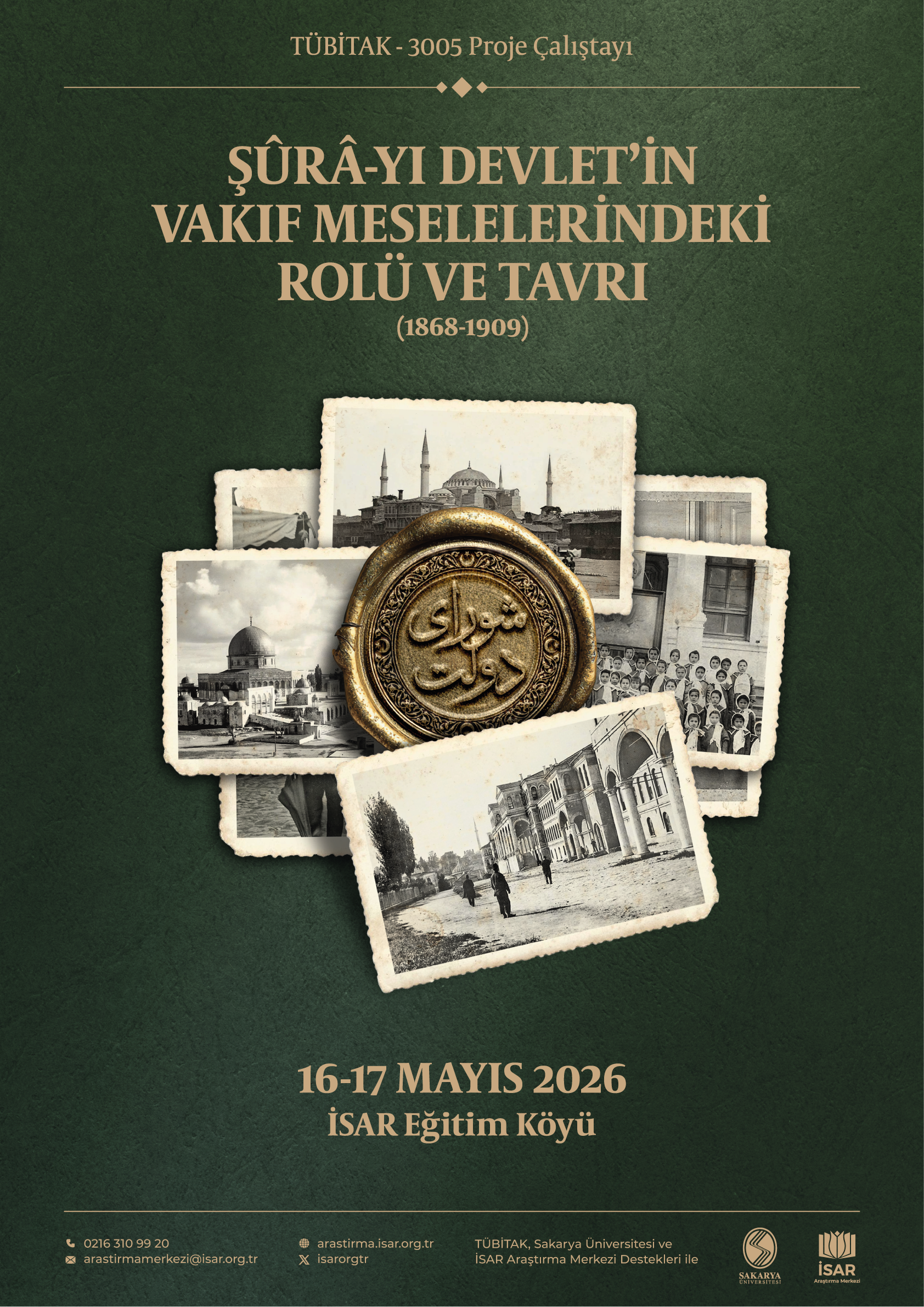
The TÜBİTAK 3005 Project Workshop titled "The Role and Attitude of the 'Şûrâ-yı Devlet' in Waqf Matters (1868-1909)" was held on May 16-17, 2026, at the İSAR Training Village. In the workshop, the role of the "Şûrâ-yı Devlet"—which held an important position in the post-Tanzimat Ottoman administrative and legal structure—in waqf (pious endowment) matters, its decision-making processes, and its attitude within the context of state-waqf relations were addressed in a multi-faceted manner.
In the workshop, which focused on the years 1868-1909, how the "Şûrâ-yı Devlet" assumed a function in different areas regarding waqfs—such as taxation, construction activities, family waqfs, the condition of the founder (şart-ı vâkıf), the interpretation of current laws, education financing, the repair of waqf structures, transfer (ferağ) procedures, and trusteeship (tevliyet) matters—was discussed. Within this framework, the role played by the "Şûrâ-yı Devlet" was examined not merely as an institution applying existing law, but as an active decision-making authority in terms of legal interpretation, administrative supervision, assessment of maslahat (public interest/expediency), and guiding the practice.
The workshop, organized in cooperation with Sakarya University Faculty of Theology and the İSAR Research Center, evaluated the late-period transformation of Ottoman waqf law along the axes of centralization policies, public interest, waqf maslahat, and administrative-legal continuity. In the workshop, researchers from different universities and institutions shed light on the position of Ottoman administrative law and the waqf institution in the modernization process through the papers they prepared based on archival documents of the "Şûrâ-yı Devlet" and related historical sources.
Click here to examine the summary booklet...